

03 June 2026
News

USDCNY: Exports drive the early strength
China’s trade data opened the year on a much stronger note than expected, with exports rising 21.8% year-on-year in the first two months of 2026, up from 5.5% in 2025 and the strongest pace since January 2022. As January and February are combined in the official release, the result cannot simply be explained by Lunar New Year distortions.
The main drivers were familiar. Semiconductors, autos and ships again led export growth, while high-tech exports rose 26.9%, reinforcing the view that China is moving further up the value chain. Importantly, value growth in key export categories outpaced volume growth, pointing to firmer pricing rather than another round of intense price competition.
By destination, shipments to the US remained weak, down 11.0% year-on-year, as tariff effects and earlier front-loading continued to weigh. Even so, that decline was less severe than the 19.9% fall recorded in 2025. Elsewhere, demand stayed strong, with exports to Africa, the EU, ASEAN, Korea and Australia all posting robust gains.
Imports: Rebalancing becomes more visible
The more constructive part of the release was on the import side. Imports rose 19.8% year-on-year in the first two months of 2026, well above market expectations and a clear improvement after an extended period of weak momentum. A softer base from early 2025 helped, but the figures still point to a firmer underlying start to the year.
That matters because Beijing has increasingly stressed the need for more balanced trade, a theme repeated at senior policy meetings including the Two Sessions. On that basis, stronger imports should be welcomed not only by China’s trading partners, but also as a sign that external strength is not the only support for activity.
By origin, imports from India, Korea, Australia and Latin America led the gains. The EU and ASEAN also recorded respectable increases, though below the headline pace, while imports from the US fell sharply. By product, technology-related categories remained the standout, with strong growth in high-tech goods, automatic data processing machines and semiconductors. Agricultural imports also increased, while crude oil showed a mixed picture, with values lower but volumes higher.
Trade balance: External support remains firm
China’s trade surplus widened to USD 213.6bn in the first two months of the year, up 26.2% from USD 169.2bn in the same period last year. That should provide a useful contribution to first-quarter growth, especially as domestic activity indicators are expected to begin the year on a softer footing.
The key issue now is how durable this pace proves to be. Trade data can be volatile from month to month, and the global backdrop remains uncertain. Higher energy prices and a weaker external growth pulse could still weigh on momentum. Even so, the drag from the US may begin to ease from the second quarter as base effects turn more favourable. If demand outside the US remains resilient, China’s exports may continue to outperform expectations.
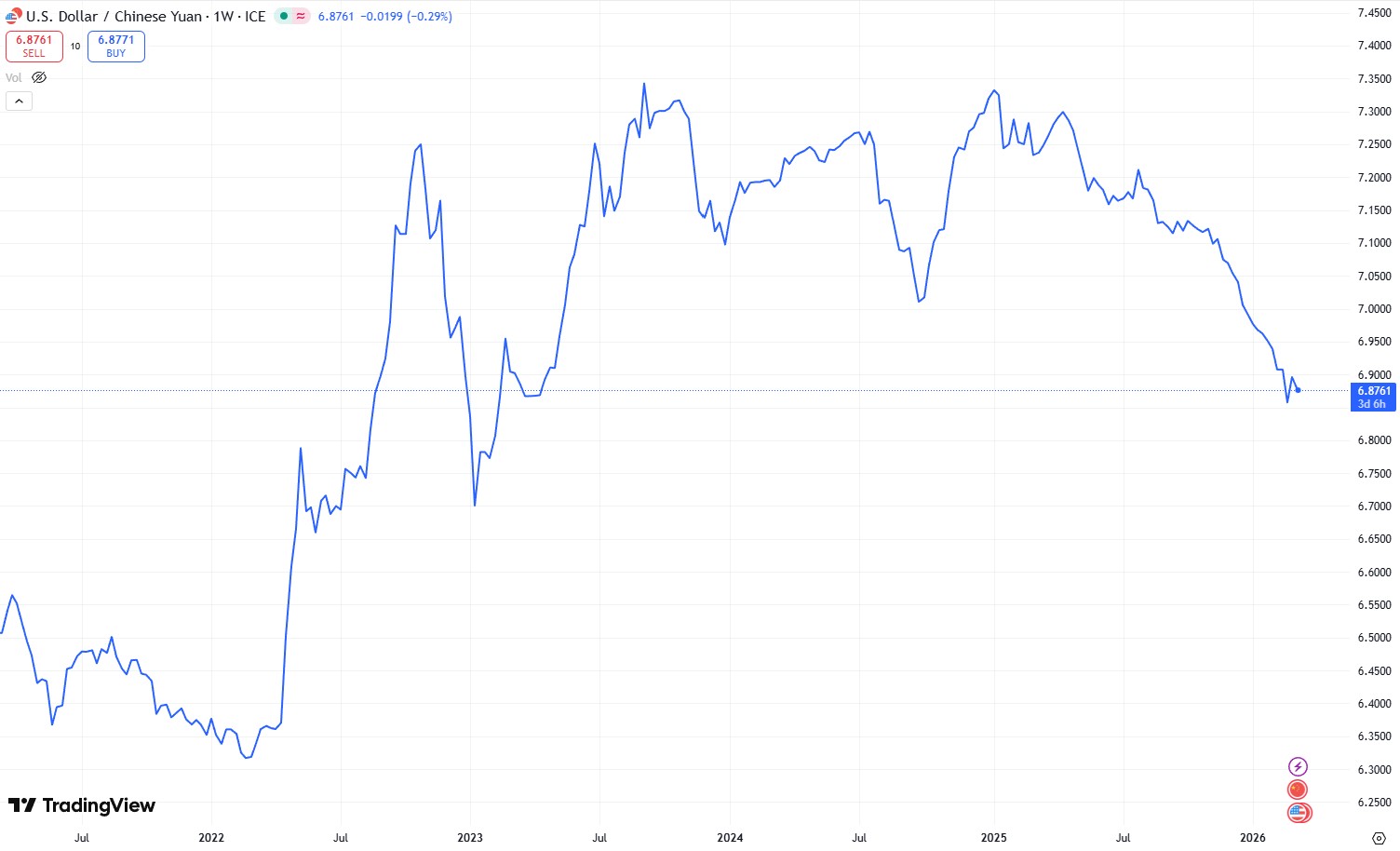
USD/CNY has broadly reflected that supportive external backdrop. The pair started the year just above 7.02 before moving lower through January and February, reaching the mid-6.8s at the strongest point for the yuan. More recently, part of that move has reversed, with USD/CNY returning towards the high-6.8s and low-6.9s in early March. Even after that correction, the pair remains below where it began the year, leaving the broader year-to-date trend tilted towards yuan strength.
Looking ahead
-
March activity data should show whether trade strength is offsetting softer domestic demand.
-
Second-quarter base effects may reduce the drag from the US trade channel.
-
Energy prices will remain a key swing factor for the import bill.
-
USD/CNY should stay sensitive to external demand, policy signals and broader dollar moves.